Most "wedding trends 2026" articles are 80% vibes. Sage-green tablescapes. Pampas grass is out. Pampas grass is back. Rust-coloured suits. Linen. Linen with structure, this year.
Here's the more interesting question: what's actually changing about weddings? Not what one Instagram account is doing, but what real couples are choosing — based on what we see across thousands of weddings using our platform, and what the broader wedding industry is reporting.
These are the shifts that are real, that have momentum, and that are going to define what 2026 weddings look like.
1. The guest list keeps shrinking
The pandemic-era "micro wedding" was supposed to be a temporary thing. It hasn't been. The average wedding guest count has been dropping steadily for five years and 2026 is more of the same.
Couples are choosing 60-100 guests over 200. Costs are higher per head, so the math forces fewer people. Quality of conversation goes up. Speeches are shorter. Photography is better.
The flip side: people who aren't invited still want to feel included. Which leads to the next trend.
2. Hybrid weddings — but quietly
Full livestream weddings peaked in 2021. Most couples don't want a Zoom link anymore — it makes the wedding feel like a corporate event.
What's replacing it is something subtler: the people who can't be there get to participate asynchronously. They record video messages from home. Those messages play during dinner, or get stitched into the final montage. The grandfather in another country isn't on a screen during the ceremony — but he's in the wedding video.
This is happening at maybe 30-40% of weddings now and the trajectory is clearly upward. It's a thing platforms like Wedding Reels are built around: capture from absent guests is a default option, not an afterthought.
3. Video is replacing photo as the primary memory
For a long time, photos were the wedding artefact. Photographers got the bigger budget. Video was an add-on. That's flipping.
Couples in 2026 are spending more on videography than photography in many cases — or treating them as equal-priority. The reason: short-form video is now the lingua franca of memory. Couples want a 90-second highlight reel they can send their friends, a 5-minute version for grandparents, a 20-minute documentary version for themselves.
The byproduct is that "video guestbooks" — where every guest contributes — fit naturally into how couples already think about their wedding. Video is the medium. The guestbook is part of the medium now.
4. The first dance is getting weirder
Choreographed first dances peaked around 2017. The current trend is the opposite: extremely short first dances that intentionally feel a little awkward, then immediately transition into "everyone dance now."
Couples are giving themselves 60-90 seconds. No big production. The DJ flips into a banger. The floor opens.
The whole "first dance is a 4-minute performance" thing is on its way out. People want the moment, not the show.
5. Sustainability is finally a real trend, not a marketing trend
For years, "sustainable wedding" meant a single recycled invitation and a vague claim. In 2026 it's getting concrete:
- Digital invitations are now the default for ~60% of weddings
- Repeated florals (rented arrangements that are reused for the next wedding) are mainstream
- Second-hand or rented dresses are no longer rare
- "Plates that don't end up in landfill" is something venues actually advertise
A digital guestbook fits this trend mechanically — no paper, no printing, no leather book that ends up in a closet. But more importantly, it fits the ethos: useful objects, things that get reused or accessed, not stuff that exists once and gets discarded.
6. Smaller wedding parties
The 12-bridesmaid lineup is endangered. Couples are picking 2-4 people total, often with no formal "wedding party" at all. Just close friends and family supporting them in unstructured ways.
This is good for everyone. It's cheaper for the friends. It's less stressful for the couple. The photos look better with 4 people in them than 14.
7. Weekday weddings, weekend events
Friday weddings are the new Saturday weddings — venue prices are 30-40% lower midweek. Some couples are doing the wedding on a Friday and a separate "casual celebration" on the Saturday for friends who couldn't make it.
This double-event format is rising. Two short events beat one giant one for both budget and energy reasons.
8. Welcome dinners are bigger than they used to be
If the wedding is small (60-100), the welcome dinner the night before is suddenly important. It used to be an intimate family-only thing. Now couples are inviting 30-50 people the night before for what feels like a relaxed pre-wedding dinner.
This is where a lot of the connection-building happens. Speeches are looser. Conversations are deeper. Many couples now consider the welcome dinner the real wedding emotionally, with the ceremony day being more about ritual.
9. Social media bans (or specific rules)
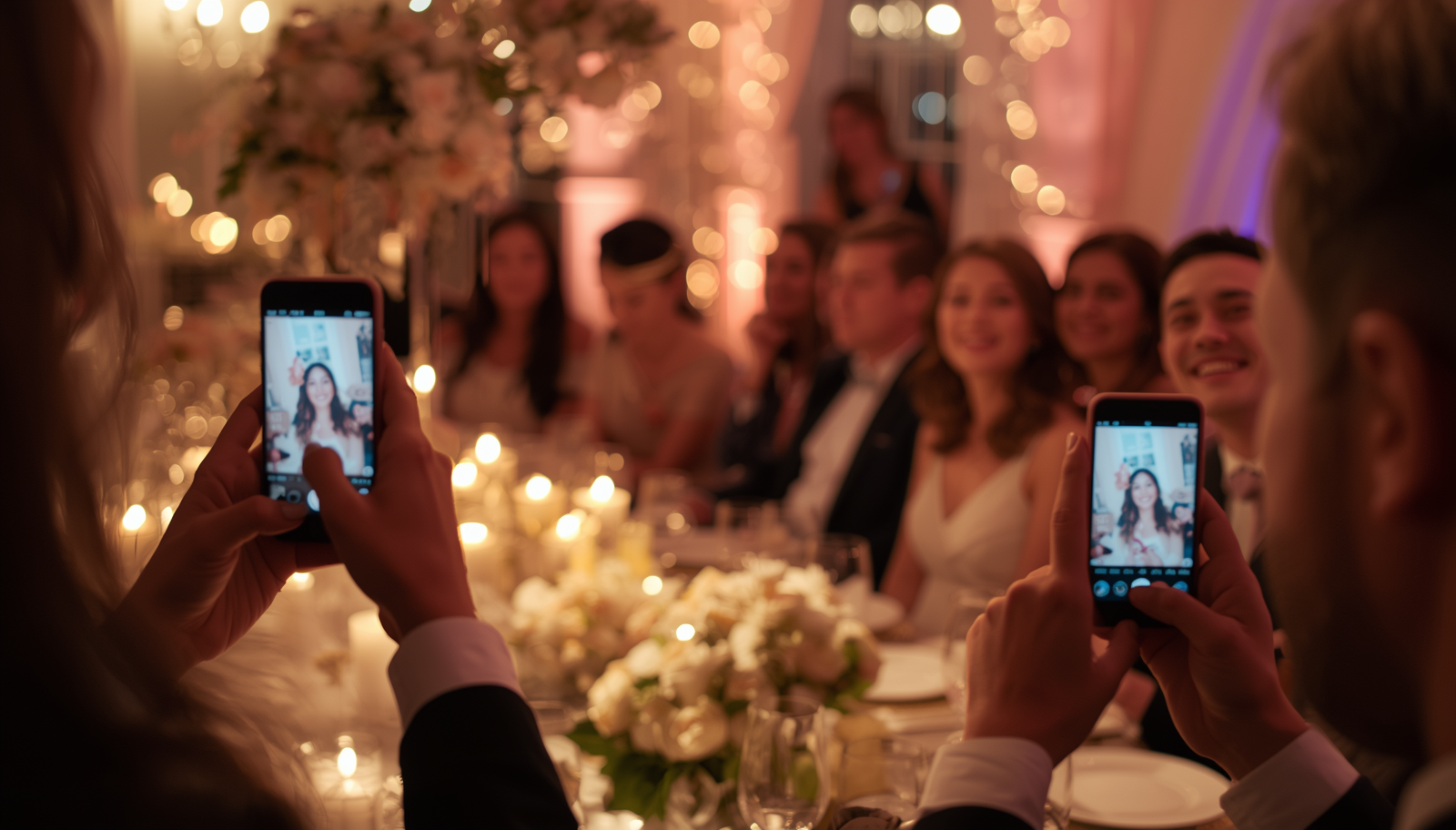
About 40% of weddings now have explicit phone/social media policies. The most common:
- Phones away during the ceremony
- Photos welcome at the reception, but no posting until the next day
- A specific hashtag for the wedding album, encouraged
The "unplugged ceremony" sign is essentially default now. Couples don't want their guests' phones in the photographer's shots.
10. Less structure, more mood
The macro-trend underneath all of this: couples are loosening up the structure of weddings.
Fewer mandatory events (no garter toss, no bouquet toss, no dollar dance). Fewer rigid timelines. Speeches happen when they happen. The first dance is short and chaotic. Cocktail hour is two hours instead of one.
The wedding is being designed for vibe over agenda. Whether that's a good or bad thing depends on the couple, but it's the most consistent shift across the industry.
What's quietly disappearing
To round it out, here's what we see less of, year over year:
- Big bridal parties (10+ people)
- Long, structured speech blocks
- The "kids' table" — kids are usually integrated now
- Plated formal dinners (replaced by family-style or stations)
- Heavy printed materials (programs, menus, full invitation suites with multiple inserts)
- The "morning after brunch" as a separate event (folded into welcome dinners)
- Cake cutting as a peak moment (often skipped or done quietly)
What this means for planning a 2026 wedding
If you're planning right now, the practical takeaways:
- Spend more on video than you might have last year.
- Plan how absent guests participate — a video message from family overseas is now a normal thing.
- Cut at least one "tradition" you don't actually want. Nobody will miss it.
- Make sure something runs that captures voices. Photos won't.
- Don't over-program the night. Three or four real moments beats twelve filler ones.
The wedding industry is moving slowly toward something more relaxed, more personal, more documented in real-time-recordings rather than staged-for-photo. That's a good direction. Lean into it.
Wedding Reels is a video guestbook for modern weddings — built for the way couples actually capture memories now. Free to start, try it →