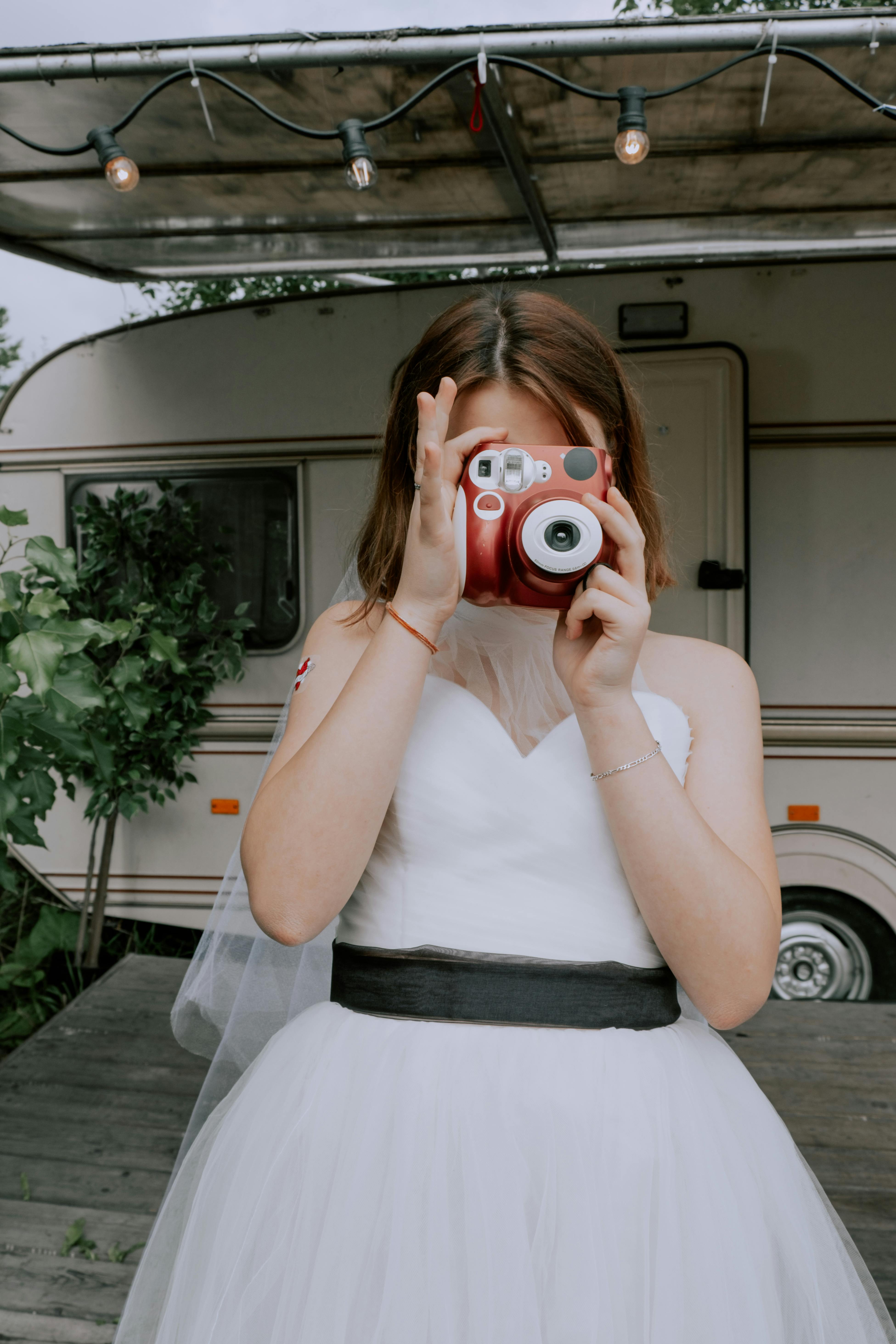
The disposable camera on the reception table is one of those wedding ideas that sounds magical and almost always disappoints. You imagine a stack of single-use cameras getting passed around, guests snapping candids you'd never get from the official photographer — the kiss your grandma snuck a shot of, the cousin doing the worm, the quiet moment between courses.
What actually happens: half the cameras go missing, two get left in an Uber, the bartender finds one in the ice bucket. You collect what's left, ship them to a lab, pay €15–€20 a roll to develop, wait three weeks — and most of the shots are blurry feet or accidental flash photos of the ceiling. The keepers are real, and you love them. But the hit rate is brutal.
This post is about how to keep the magic of disposable wedding cameras — the grain, the unposed candids, the date stamp in the corner — without losing 80% of the photos on the way home.
Why disposable wedding cameras keep coming back
The aesthetic is undefeated. Film grain softens skin. The harsh on-camera flash flattens everything into one consistent look across hundreds of shots. The date stamp anchors the night in time. And — most importantly — handing a camera to a guest changes what they photograph.
When your guest has a disposable in their hand, they don't take portraits. They take moments. The bridesmaid fixing her lipstick in the bathroom mirror. The bartender mid-pour. Two uncles you didn't know were friends, both crying. Your professional photographer can't be in all those rooms at once. Your guests can.
That's the real value of disposables at a wedding: not the camera, the permission. The little plastic box is a license to point a camera at people who would never let a professional photograph them like that.
What goes wrong with real disposables
Three things, in order of how badly they hurt:
Loss. You buy 15 cameras at €12 each, scatter them across tables, and collect 9 at the end of the night. The other 6 are in cars, coats, taxis, and one is genuinely never seen again. That's €72 of cameras, and — worse — every shot on those rolls.
Cost to develop. Lab development at €15–€20 a roll, plus scanning if you want digital copies. Nine rolls is €135–€180 and a month of waiting. Couples who do the math after the fact almost always wince.
Hit rate. Disposables have no preview screen. Guests guess at exposure. They forget to use the flash. They put a thumb over the lens. A typical wedding roll of 27 exposures yields maybe 8–10 keepers. The other two-thirds are charming garbage.
You can budget around all three — buy more cameras, pay the lab, treasure the keepers. Lots of couples do. But there's a version that gets the same look with none of the loss.
The modern version
A "digital disposable" is exactly what it sounds like: the disposable camera aesthetic — grain, flash, date stamp, low resolution — applied to photos your guests take on their phones. Same look. None of the loss.
In Wedding Reels, this is built into the same QR code your guests already scan to leave a video message. They tap the photo button instead, the camera shoots in a disposable-style finish (warm grain, slight flash falloff, date stamped in the corner), and the photo lands in your private album seconds later. No app, no account, no film to lose.
A few things this gets you that real disposables can't:
- Every shot survives. Photos upload as they're taken. A guest losing their phone (or just forgetting to hand back a camera) costs you nothing.
- No development bill. Photos arrive at full resolution, ready to download or print. You're not paying €15 per roll to find out which ones came out.
- You see them on the day. A bridesmaid takes a photo of the cake before it's cut; you can see it in your dashboard ten minutes later. Real disposables make you wait a month.
- Guests don't have to learn anything. They already know how to use their phone camera. The disposable look is applied automatically; they don't have to think about it.
- You can still print a film-roll album. Export the full set, send it to a photo book service, and you have a physical book that looks every bit as authentic as one made from scanned negatives.
What guests actually photograph (and why you want it)
Once you give guests a disposable-style camera, certain shots show up at every wedding. None of them appear on the professional photographer's contact sheet.
The bathroom mirror selfies. Bridesmaids touching up makeup, friends fixing each other's hair. These are the most reliably loved photos from any wedding.
The kids. A six-year-old with cake on his face holding the camera at thigh height. The angle is wrong. The framing is wrong. It's perfect.
The behind-the-scenes. Catering staff plating a course, your DJ adjusting a cable, the florist fussing over centerpieces. The wedding as a machine, glimpsed sideways.
The "you weren't there" moments. A long conversation between two of your guests at 1am on the smoking porch. A grandparent quietly holding a baby cousin. The professional photographer left at midnight.
The accidental art. A shot of someone's shoes, taken by mistake. An out-of-focus chandelier. A reflection in a glass. The misfires of disposables are part of the medium.
Your professional album will be beautiful and curated. The disposable album will be loose, surprising, and full of faces from angles only the people in the room could ever have captured. They're different things, and you want both.
How to actually run it on the day
Whether you use real disposables or the digital version, the setup is mostly the same:
- Put it on every table. Don't make guests hunt. A small card with the QR code (or the camera itself) at each table is enough.
- Tell them what to shoot. "Take photos of each other" works, but specific prompts work better — "candid shot of someone laughing", "photo of someone you just met tonight". Wedding Reels surfaces these automatically; if you're going analog, write a few on the table card.
- Don't over-curate. Resist the urge to filter or theme. The point is variety. You'll edit later.
- Remind guests at the toasts. A one-line mention from the MC — "grab a phone, grab a camera, we want to see the night through your eyes" — doubles participation. Every time.
The case for doing both
If you're booking a professional photographer, you should. The disposable look is not a replacement for portraits, the first dance, or the ceremony shots a pro will nail. It's the other layer — the one your photographer literally can't be in the room for.
The best wedding albums are two albums in one: the polished portfolio your photographer hands over, and the messy, intimate, unfiltered set your guests captured. The first one tells the story you planned. The second one tells the story that actually happened.
Wedding Reels includes disposable camera mode free with every wedding, alongside the video guestbook. Guests scan one QR code and can leave a video, take a disposable-style photo, or both — and everything lands in your private album, ready to download or print. Set yours up in 90 seconds — free to try.